
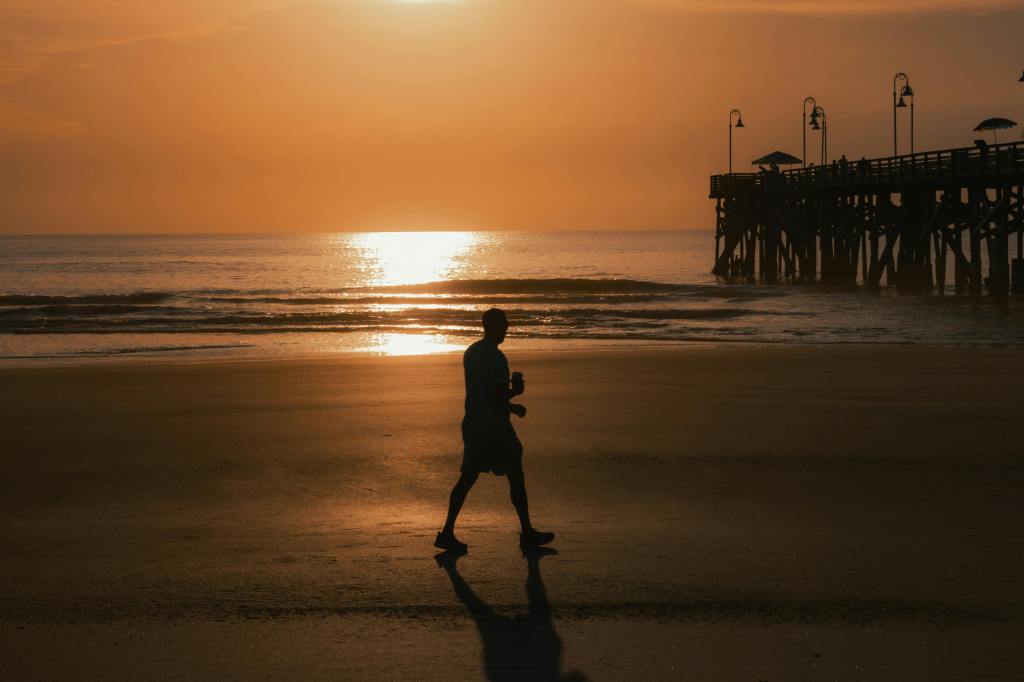
While morning training activates focus and discipline, the end of the day plays a crucial role in recovery and nervous system regulation.
Scientific research shows that properly designed physical activity in the evening can support parasympathetic activation, stress reduction, and emotional balance.
This article explores how sunset training influences the nervous system, and why it is a key element of the OmniKairos experience.
The Nervous System and Daily Stress Accumulation
Throughout the day, the nervous system is exposed to continuous cognitive, emotional, and sensory stimulation.
This accumulation of stress activates the sympathetic branch of the autonomic nervous system, increasing muscle tension, heart rate, and mental noise.
Without intentional regulation, the body remains in a state of low-grade alert even during rest.
Parasympathetic Activation and Recovery
The parasympathetic nervous system is responsible for recovery, digestion, and physiological restoration.
Studies in neurophysiology show that slow, controlled movement combined with calm breathing can stimulate parasympathetic activity, lowering cortisol levels and promoting relaxation.
Evening training designed around these principles supports the transition from action to recovery.
Why Timing Matters for Nervous System Regulation
The nervous system responds not only to movement, but also to timing and environmental cues.
Training at sunset aligns physical activity with natural decreases in light exposure and metabolic demand, reinforcing signals associated with rest and emotional regulation.
This timing helps the brain shift out of performance mode and into recovery mode more efficiently.
Why OmniKairos Uses Sunset Training
At OmniKairos, sunset training is not designed to exhaust the body.
It is structured to regulate the nervous system, release accumulated tension, and restore internal balance.
These sessions are built as experiences that integrate movement, environment, and intentional pacing to support recovery beyond the physical level.
Recovery is not passive.
It is an active process that requires the right stimulus, at the right moment.
Sunset training creates the conditions for the nervous system to reset, preparing the body and mind for sustainable performance.
Scientific References
– Porges, S. (Polyvagal Theory): Autonomic nervous system regulation
– Thayer et al., International Journal of Psychophysiology: Heart rate variability and parasympathetic activation
– McEwen, B., Annals of the New York Academy of Sciences: Stress and allostatic load
– Streeter et al., Journal of Alternative and Complementary Medicine: Movement, breathing, and nervous system balance
 OmniKairos | Personal Training & Wellness Coaching in Barcelona